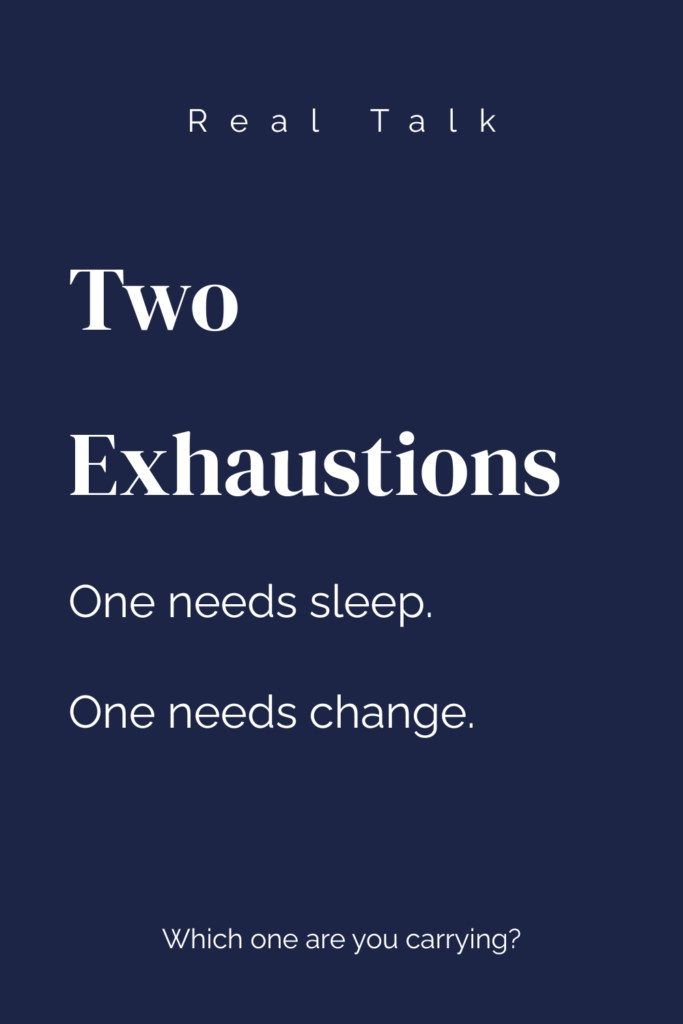
There’s a kind of exhaustion many dads don’t talk about. It isn’t the loud burnout or the dramatic breaking point that makes for a good story. It’s quieter than that. It’s the steady weight of being responsible, present, and composed in the way everyone expects.
Over time, that rhythm can stop feeling like strength and start feeling like pressure. The kind that builds slowly and invisibly until you realize you’ve been running on fumes while calling it fine.
This framework isn’t about escaping responsibility. It’s about regulating it. A dad who understands his capacity does not just survive the demands of the role. He leads from a steadier place.
Why Dads Need a Reset Rhythm
Most dads do not need motivation. They need margin, structure, and permission to recalibrate without feeling like they are falling behind.
When exhaustion goes unnamed, it turns into irritability. When pressure goes unchecked, it becomes identity. Those are not character flaws. They are what happens when a capable man runs too long without a rhythm that restores him.
A reset rhythm interrupts that pattern. Not by removing responsibility, but by organizing it in a way that leaves room for the man carrying it.
The 7-Day Dad Reset
Monday — Ground
Start steady. Not reactive. Not rushed.
Monday is not about productivity. It is about posture. Before you answer emails, fix problems, or step into provider mode, regulate yourself first.
Grounding looks like pausing before responding, choosing your tone instead of reacting to someone else’s, and setting one clear priority instead of scattering your focus across ten. It is a small shift in sequence that changes everything that follows.
If your internal pace is chaotic, your external leadership will be too. Ground first. Everything else follows.
Tuesday — Build
Build space. Not pressure. Not performance.
Space is margin in your calendar, fewer unnecessary commitments, and the discipline to stop overfilling your week to prove something. It is not a luxury. It is architecture.
Building space might mean saying no early, declining to volunteer for what is not yours to carry, and blocking time that is not productive in the traditional sense but protective in every sense that matters.
Pressure compounds when your week has no breathing room. Space protects capacity.
Wednesday — Reflect
Take inventory. Protect your energy. Release what drains it.
Midweek is often when hidden exhaustion surfaces, not loudly, but in the way you snap at small things or lose patience with people you love. That is your signal to pause and look inward.
Ask yourself what conversations drained you, what expectations you are carrying alone, and what tension has settled into your body without you noticing. These are not soft questions. They are diagnostic ones.
Energy awareness is not weakness. It is data. If you do not track your energy, you will mislabel it as failure and keep pushing through something that was asking you to stop.
Thursday — Adjust
Adjust the rhythm. Keep what matters. Cut what does not.
Once you see what is draining you, change something. Not everything. One thing. That distinction matters because dads who try to overhaul everything at once usually change nothing.
Adjustment might look like shortening a meeting, delegating one task, or lowering a standard that was never necessary to begin with. None of it feels dramatic. That is the point.
Small rhythm shifts prevent burnout spirals. You do not need a breakthrough. You need a correction.
Friday — Move
Speak clearly. Set expectations. Then step back.
Many dads carry silent pressure because they never communicate it. They absorb it, manage it quietly, and then wonder why the weekend still feels heavy.
Before the weekend, clarify your plans, state what you need, and align expectations at home and at work. Not as a performance of organization, but as an act of honesty with the people around you.
Unspoken tension lingers longer than most dads realize. Clear communication creates the margin to actually rest when rest arrives.
Saturday — Rest
Rest your body. Quiet your mind. No earning required.
Rest is not collapse. It is intentional disengagement from the constant pull of responsibility. That distinction matters because many dads only allow themselves to stop when they are already broken.
That might mean no productivity projects, no solving everything in sight, and no chasing the illusion of catching up. Just space, stillness, and you without an agenda attached to your name.
Your body and mind need recovery to stay steady. Rest is maintenance. A dad who treats it that way does not fall behind. He shows up fuller on the other side of it.
Sunday — Capacity
What is costing you energy? What would protect your capacity this week?
Sunday is not for pressure planning. It is for honest recalibration. A quiet audit of where you are before the week asks anything of you again.
Capacity is not built by pushing harder. It is built by protecting rhythm, by returning week after week to the same intentional questions, and by making small, consistent decisions that compound into a steadier version of yourself.
This is the work. Not the dramatic overhaul, but the quiet commitment to showing up for yourself the same way you show up for everyone else.
Lead From a Steadier Place
The dads who lead well are not the ones who push the hardest. They are the ones who know how to recover, recalibrate, and return with something left to give.
This framework will not eliminate pressure. It will give you a rhythm strong enough to carry it.
Start where you are. Start this Monday. Trust that steady, practiced over time, becomes something your family can feel.